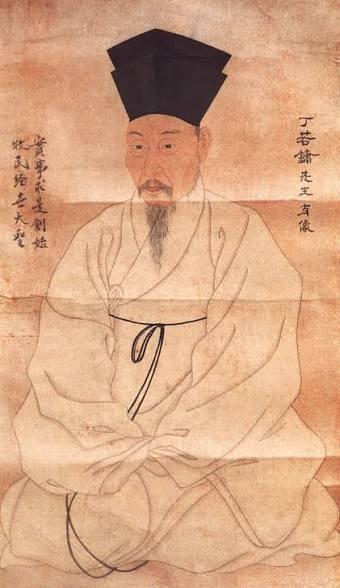
다산에게서 배우다
다산학 강의 1
大學公議 대학공의
禮記四十九篇。鄭目錄大學第四十二。〇鄭端簡古言云孔伋窮居于宋。作大學以經之。作中庸以緯之。詳見中庸箴〇案先儒謂中庸子思所作。緇衣公孫尼子所撰。鄭康成云月令呂不韋所修
。盧植云王制漢文時博士所錄
노식은 왕제편은 한나라 문제때 기록한 것이라 하였다.
Lu Zhi said Wangzhi (Royal Regulations) was written/recorded during the reign/era of Emperor Wen of Han.
三年問荀卿所著, 樂記河間獻王諸生所輯
삼년문편은 순경이 지은 것이고, 악기편은 하간헌왕때, 여러 유학자들이 편집한 것이다.
Sannian Wen (Questions About the Mourning for Three Years) was written/recorded by Xunzi and Yueji (Record on the Subject of Music) was edited by several scholars during the reign/era of Liu De, Prince of Hejian.
。皆有古據。至於大學。前人不言誰人所作。
이제까지 언급된 모든 것들은 나름 근거가 있는 것이지만 ,대학에 관해서만은 어느 누구의 작업의 결과인지를 말하고 있지 않다.
Although everything mentioned until now is well based in its own ways, there is no mention of whose work Dauxe (Great Learning) was the result of.
鄭端簡所引賈逵之言。明係僞造。不可從也
정단간은 가규의 말을 인용하고 있는데, 이것은 거짓으로 꾸며낸 것이 확실하기 때문에 따를수 없다.
Jeong Dan-gan quotes Ga Gyu's words, but this cannot be followed because it is certain that it is a fabrication.
朱子謂曾子作經一章。曾子之門人作傳十章 亦絶無所據.
주자는 증자가 경 1장을 지었고 증자문하의 제자들이 전 10장을 지었다고 말했지만. 이 또한 분명한 근거가 있는 것도 아니다.
Zhu Xi claims that Zengzi wrote the first chapter of 經 and the pupils studying under him wrote the 10th chapter of 傳 but this also does not have substantial basis.
。朱子以意而言之也。朱子以爲孔子之統。傳于曾子。以傳思孟。而思孟有著書。曾子無書。故第取此以連道脈耳。
주자는 개인적 사견을 가지고 그렇게 언급했던 것이다. 주자에 따르면 공자의 학문의 맥이 증자에게 승계되었고 , 이러한 학맥이 자사와 맹자에게 이어졌는데, 자사와 맹자는 자신들의 저서가 있지만 증자는 저서가 없으므로 ,대학을 가져다가 학문의 맥을 이었을 뿐인 것이다(즉 대학을 증자의 저서라고 추정하여서 학문의 맥을 잇는 적자임을 예증하려 한 것이다/역자주)
Zhu Xi argued the above based on his personal opinion. According to Zhu Xi, the academic legacy of Confucius was succeeded by Zengzi and continued by Zisi and Mencius. Because Zisi and Mencius have written accredited work and Zhu Xi does not, Zhu Xi only continued the scholastic legacy through Dauxe (Great Learning). (Here, Zhu Xi assumes that Dauxe (Great Learning) is written by Zengzi to exemplify how Zengzi is most qualified to continue the scholastic legacy.)
亦安知其不然哉。
하나 이것이 사실이 아니라고 하더라도 어떻게 알수 있겠는가 ~
How would one know if this is said to not untrue?
〇近聞翁覃溪門友阮元。取大戴禮曾子十篇。表章而注解之。亦道統連脈之意.
요사이 듣자하니 , 옹담계의 문하의 완원이 대재례의 증자 10편을 발췌해서 ,세간에 알리고 주해하였다고 하는데, 이 역시 학문의 맥을 이어가고 있다는 의미일 것이다.
Apparently, recent opinion is that Juan Yuan, a pupil who studied under Weng Tan Xi, extracted(?) the ten volumes of Zengzi from Daedaerye大戴禮 , brought them to public knowledge and annotated them. This too probably signifies the continuation of the scholastic legacy.
。然第十天圓篇。似不雅馴也。
그러나 제 10 천원편은 ,어투나 필적,문장 모두가 깊이나 기품이 없다.
However, the tenth volume cheon-won lacks depth and dignity in tone, handwriting and sentence.
宋史云仁宗天聖八年。以大學賜新第王拱辰等
송나라 역사서 송사에 의하면 , 인종, 천성 8년에 과거시험에 새로이 급제한 왕공신을 비롯한 여러 급제자들에게 대학을 내려주었다는 기록이 있다.
According to Song Shi, the record of the history of the Song dynasty, Dauxe
(Great Learning) was handed down to many of those who passed the imperial examination, including Wanggong Chen who did so in the 8th year of Tiansheng during the reign of Emperor Renzong of Song.
。〇案近儒據此謂宋仁宗時。大學早已專行。又謂韓愈原道。獨標誠意。卽在唐世。早已專行。皆非公言
나의 생각은 다음과 같다. 오늘날 유학자들은 바로위에서 언급한 사실에 근거해서 송나라 인종때, 이미 대학이 책자로 출간되었다고 주장하기도하고 ,또한 한유가 쓴 원도에도 성의장을 적시했고 당나라때 이미 대학이 출간되었다고 하지만 ,이러한 언급들은 공정하고 객관적인 진술이 아니다.
My thoughts are as thus follows. Some Confucian scholars of today assert that Dauxe (Great Learning) was already published as a booklet during the reign of Emperor Renzong of Song based on the information above while others pointed to Seong Ui-jang in Yuandao (The Origin of Dao) written by Han Yu as evidence.
However, these references are not just and objective statements.
又謂韓愈原道。獨標誠意。卽在唐世。早已專行。皆非公言。
大學表章。自二程始。大學之列爲四書。自元仁宗八比法取朱子章句始也。
대학을 들추어 세상에 두루 밝힌 것은 정이천,정명도 두사람에 의한 것이 었다. 대학이 사서의 반열에 오르게 된 것도 원나라 인종때 팔비법에서 주자장구를 취하면서 부터이다.
It was Cheng Yi and Cheng Hao who revealed Dauxe (Great Learning) thoroughly to the world. It was also whenJuja Janggu朱子章句 was selected/executed in baguwen (eight-legged essay) during the reign of Emperor Renzong of Yuan that Dauxe (Great Learning) joined the ranks of the Four Books.
大學者。國學也。
대학이라는 것은 국학을 의미한다.
Dauxe (Great Learning) signifies the study of culture and heritage of nations
居冑子以敎之。大學之道。敎冑子之道也。
태학이 국학이라는 것은, 제왕과 경대부의 맏아들에게 가르치는 것이므로 태학의 도라는 것은 맏아들을 가르치는 방법을 의미한다.
Dauxe (Great Learning) is the study of nations because it is what is taught to the emperor and the first son of Kyungdaebu卿大夫 Its doctrine signifies the way of teaching the first son.
〇議曰舊音大讀爲泰。今人如字讀。非也。
나는 논한다.
I argue as thus follows.
옛음으로 대를 태로 읽는다. 오늘날 사람들이 글자그대로 대를 대로 읽는데 이것은 잘못된 것
이다.
Da was read as Tai in the sounds of old. Those of today read Da as Da as it is written literally which is wrong.
大學之道一句。不惟此經有之。學記曰大學之道。近者悅服。遠者懷之 又曰大學之敎。時敎必有正業。又曰大學之法。禁於未發 .
대학지도의 구문은 비단 이러한 경전에만 있는 것이 아니다. 예기의 학기편에 의하면 태학의 도는, 가까이 있는 사람들이 마음속으로 기뻐하며 따르게하고, 먼곳에 있는 이는 마음에 품어 따르게 하는 것이라고 하였고, 또 태학을 가르침에 있어서 때에 맞게 가르쳐야 하며 선왕의 전적을 가르쳐야 한다고 하였다. 또한 태학의 법은 그 감정이 발하기 전에 미리 금하는 것이라고 하였다.
(전적:일정한 목적, 내용, 체재에 맞추어 선왕의 사상, 감정, 지식 따위를 글이나 그림으로 표현하여 적거나 인쇄하여 묶어 놓은 것.역자주).
Dauxe (Great Learning) is not the only one to have its particular sentence structure. According to Xueji (Record on the Subject of Education) of the Book of Rites, the doctrine of Dauxe (Great Learning) is to make those near to you follow by making them happy within and those far from you by keeping them close to your heart. The Dauxe should also be taught accordingly and teach the complete legacy of the late emperor. The law of Dauxe is also to prohibit emotions before they emanate through.




 참 좋은 시절이었지!
 이 땅의 西洋化勢力이 逆說的으로 枯死시키는 西洋學問
 2학년부터 연구실로!
 2026.7.6 《존재의 성향과 공동체의 책임에 대하여》
 도마복음 해설강의 [4]
 새로운 철학적 글쓰기를 향한 거침없는 도전?
 목록
목록